Listen from before the last attack
Identify key release, pedal release and the point where the chord blends into room tone. The end of the last MIDI bar is only one of those landmarks.
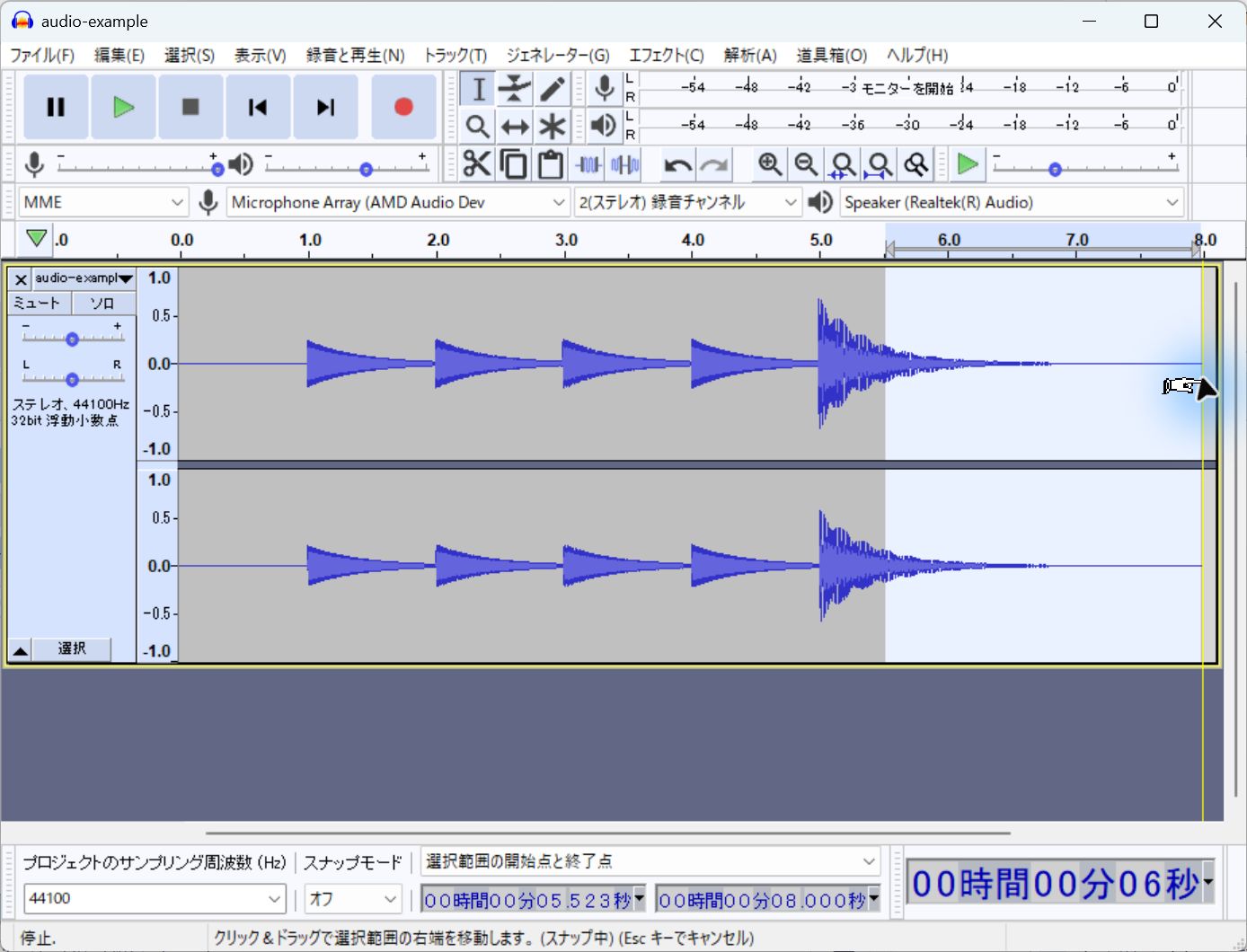
An attack at 12 seconds
If the chord remains audible until 15 s, keep those three seconds in the soundtrack. Hold the final picture if necessary and decide the following silence in a real-time playback.
| 12 seconds | Last chord attack |
|---|---|
| 15 seconds | Example decay endpoint. Decide the real one by listening |
Listen at the intended level
A magnified waveform also shows room noise. Before extending the video again, listen at the same level and on the same device as the rest of the performance.
Identify what is audible at the end
Mark the final attack, key release, pedal release and the moment the room decay disappears. The last MIDI key can return while the recorded pedal is still down. Cutting both sound and picture at that instant can make the chord sound abruptly shut off.
Set the ending by listening to the audio alone at a normal level. Then restore the picture and decide whether the last seconds require new keyboard action or simply a quiet frame for listening. Extending resonance does not require inventing more notes in the MIDI.
Audition three possible endpoints
Compare a cut immediately after release, one after audible decay and one with roughly an additional second of room. Listen from before the final chord each time. Auditioning the tail in isolation can encourage a longer ending than the phrase needs.
A standalone performance and a lesson that flows directly into another exercise can warrant different gaps. In the latter, include the next count-in in the test and check that the old chord does not mask it. A click precisely at the cut is a separate edit-boundary problem.
Should I cut the pedal release at the end?
A recital video can reasonably retain it as part of the performance. If it distracts in a quiet lesson, compare an earlier endpoint with a gentle fade around the release, both at the same level. Do not sacrifice the chord’s decay merely to hide a natural mechanical sound.