Isolate four notes
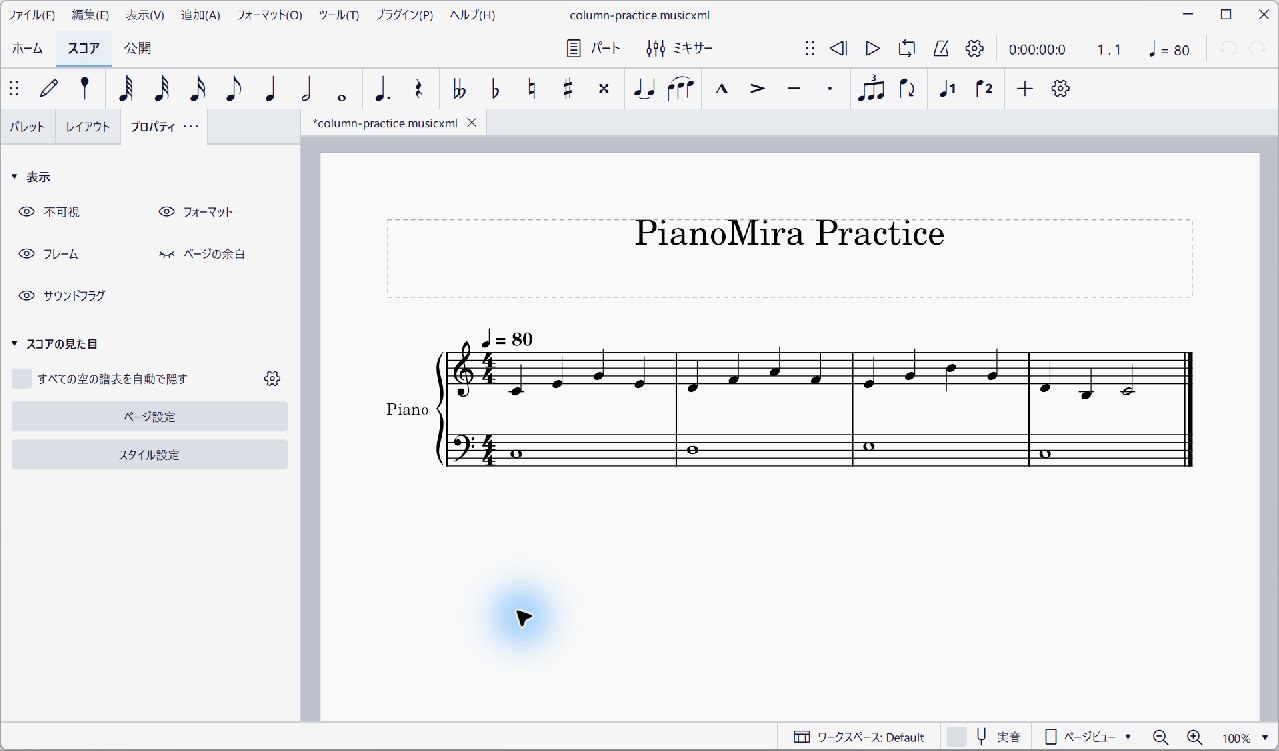
For a right-hand ascending C-major scale, use D–E–F–G. Compare D to E, E to F and F to G in a slow replay of your own performance.

Aim for 250 ms intervals
At 120 BPM, eighth-note attacks fall at 0, 250, 500 and 750 ms. If E to F is short, let the thumb travel but wait for the third marker before sounding F.
Test the descent separately
The same pitches feel different on the way down. Check the intervals and listen for an accidental accent on either side of the thumb.
Compare the crossing with a four-finger control
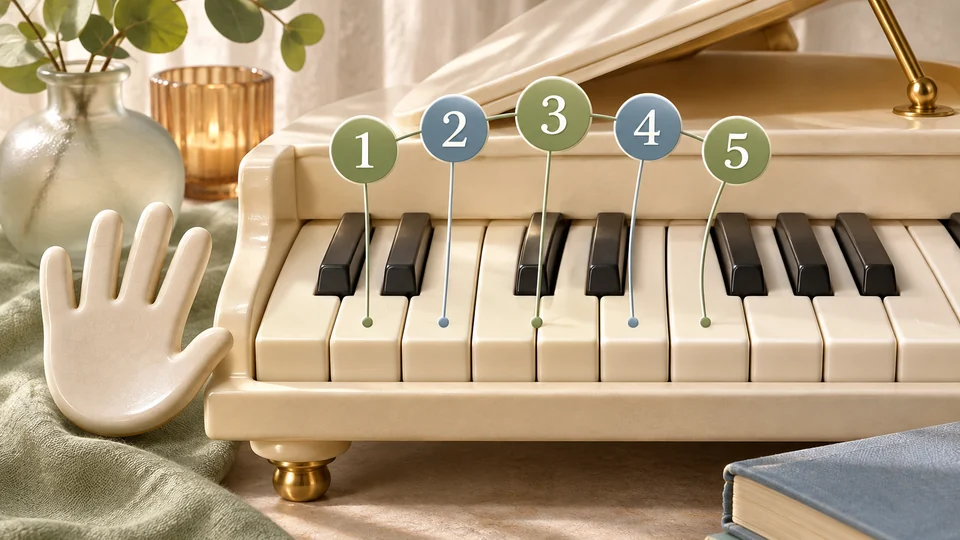
Play D–E–F–G slowly with four neighbouring fingers and listen for equal spacing. Now repeat the same pitches with the scale fingering you intend to use. If only the crossing version compresses E to F, you have isolated a movement problem. The four-finger version is a diagnostic, not a prescribed scale fingering.
Starting the thumb movement and sounding F need not coincide. A late scramble can send the thumb into F early. Test whether you can prepare close to the key and wait for the intended subdivision before pressing.
Track accent separately from timing
A loud F can sound like a lunge even when it lands on time. Check intervals in the recording and, if available, velocities in MIDI. If E to F is correctly spaced, match only the strength on the next attempt; do not delay F.
Restore C before and A after the four-note fragment. Listen for the same evenness in the longer scale. Where a tutorial camera hides the thumb, the onset of F and the continuation to G are more reliable guides than imitating an obscured hand shape.
Should I use the same fingers for scales with black keys?
The D–E–F–G example is in C major. For another key, use the fingering intended for that scale. Transfer the diagnostic method: isolate four notes around the crossing and judge timing and accent separately, rather than transferring the finger numbers unchanged.