
PIANOMIRA JOURNAL
Practice videos
Use slower playback, separate hands and short loops to work on your piece.
Articles 1–10 of 11
Play two against three on piano with a six-slot grid
Counting two pulses in one hand and three in the other can obscure their order. A shared grid gives both hands the same starting point.
Read article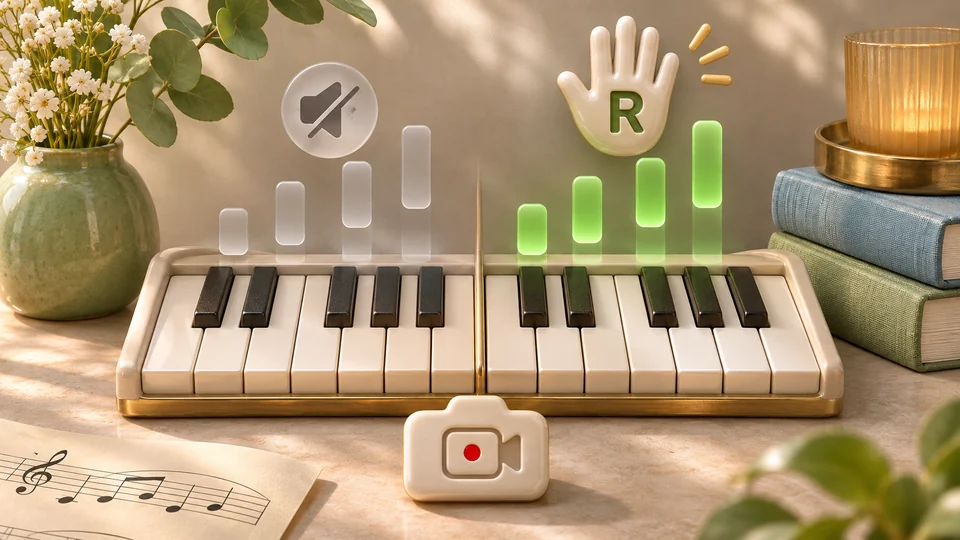
How to make a one-hand practice video with Synthesia and OBS
Set the hands, note display, sound and speed in Synthesia, then record its screen and audio with OBS Studio. Hiding notes and muting a part are different settings, so check both before recording.
Read the guide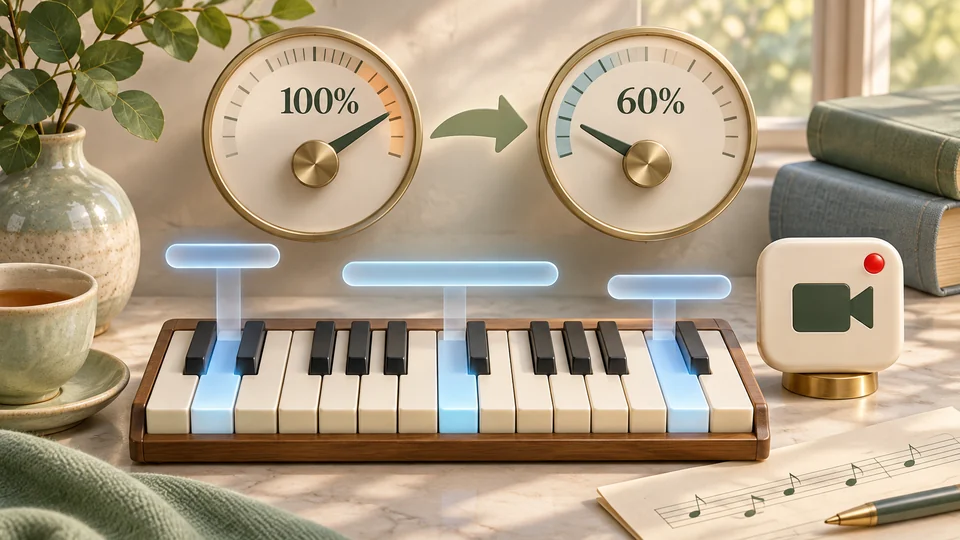
How to record a slow practice video from Synthesia with OBS
Lower the playback speed in Synthesia, then record the resulting picture and sound with OBS Studio. This changes musical playback speed, unlike a visual falling-note speed setting.
Read the guide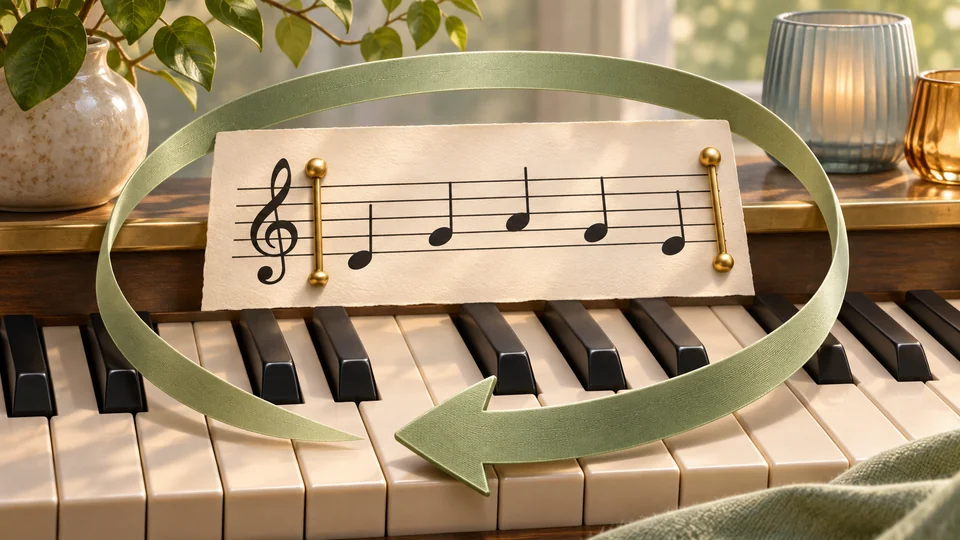
How to repeat a short practice passage in Synthesia
Use Synthesia's timeline to return to the same short phrase, then practice it at a manageable speed. This walkthrough uses manual playback repositioning; repeating a saved MP4 is controlled by your video player.
Read the guideStop a dotted eighth and sixteenth turning into two equal notes
“Long, short” tells you little about exactly where the short note enters. Divide the beat into four and aim for its last subdivision.
Read articleEnter an offbeat piano phrase without rushing the rest
If the first visible note is your only landmark, an offbeat can start to feel like a downbeat. Give the unplayed beat an audible or physical marker.
Read article
Bring out the top voice of a piano chord
A chord can contain every correct note and still hide the tune. Listen to its top and inner voices separately before turning up the whole recording.
Read article
Practise a piano leap by starting at the landing key
Speed alone does not solve a leap aimed at the wrong key. Learn how the target looks and feels before joining it to the departure note.
Read articlePractise a same-key handover between the hands
Watching one hand alone can hide the reason a key sounds twice. Work out who releases it and who is responsible for the second attack.
Read articleSteady the bass–chord–chord pattern in a piano waltz
The leap from beat three back to the next bass can rush a waltz. The bass line alone makes the distance between downbeats easier to hear.
Read article