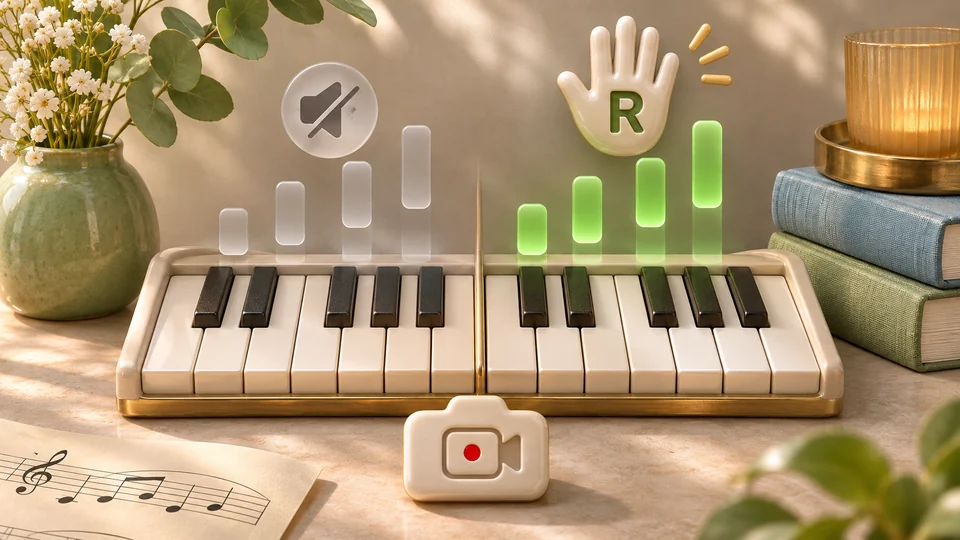
Join bass notes first
Play only the first beat of each bar. Add a chord on beats two and three while keeping the bass arrivals in the same place.
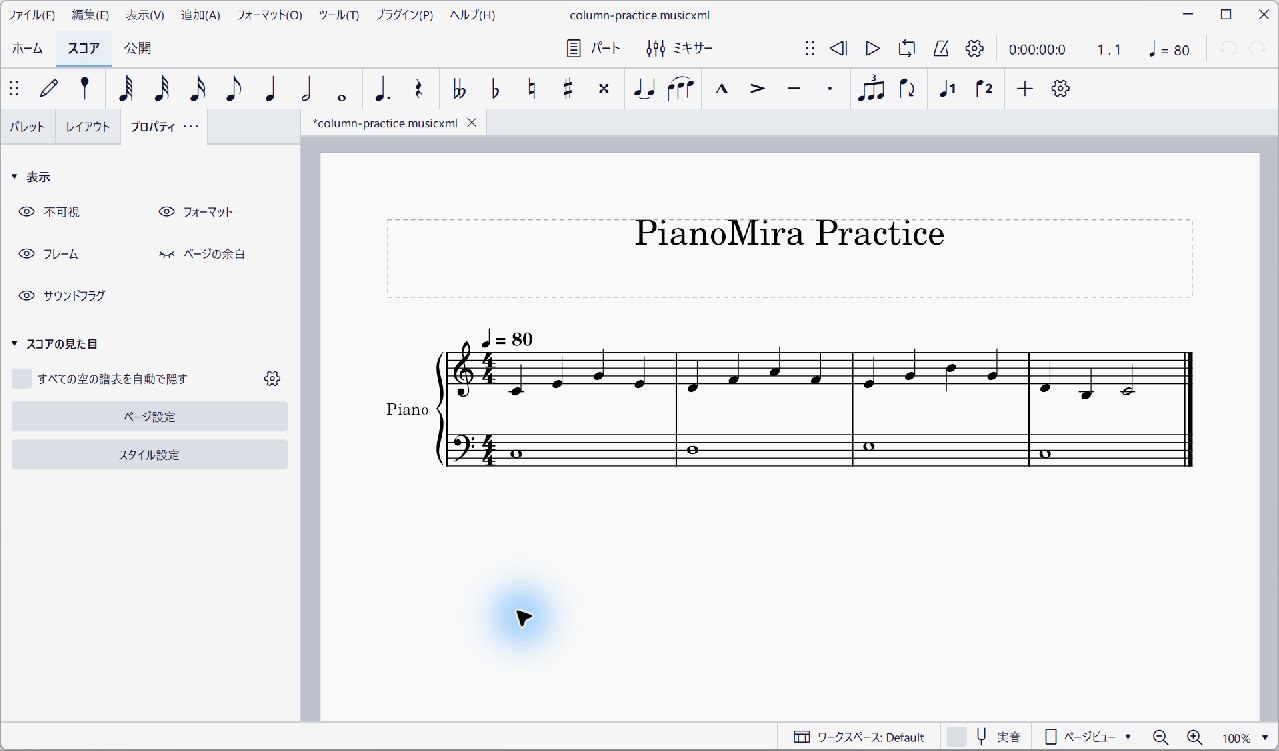
Time a bar at 90 BPM
Three quarter notes last two seconds. Place bass at 0, chords near 0.67 and 1.33, and the next bass at 2.00 s. The return now has an audible deadline.
Keep the next downbeat in the clip
Look for the next bass while the third beat is sounding. End the practice segment after the next downbeat so you can hear a rushed return.
Practise beat three into the next bass first
Starting every repetition on beat one leaves the difficult return at the end of the exercise. Start on the third-beat chord and play only that chord into the next bass. When this pair feels settled, add beat two before it and then restore the opening bass.
At 90 BPM there are about 0.67 seconds between those attacks. A long chord on beat three leaves less travel time. Listen separately for release and for the next bass attack. Advancing the downbeat to rescue the leap pulls the whole new bar forward.
Give the bass and chords distinct jobs
Once the pulse is stable, listen to the bass as a line across several bars. If the chords suddenly dominate after you add them back, tension before the jump may be accenting beat three. Try lighter second and third beats before changing any timing.
A two-second bar is a practice reference, not a rule for expressive performance. Use steady time to identify an unintended rush, then restore the melody and keep the timing variations that serve the phrase.
What if the bass is steady alone but rushes under the melody?
Add only the first right-hand note of each bar. If the bass already rushes, examine the joint downbeat. If it stays steady until the full melody returns, isolate the difficult melodic figure through the following bass instead of repeating the entire piece.