Sing the late entry
Count four subdivisions. Tap only one and four. At first, concentrate on waiting until four rather than trying to hold the first sound for a particular length.
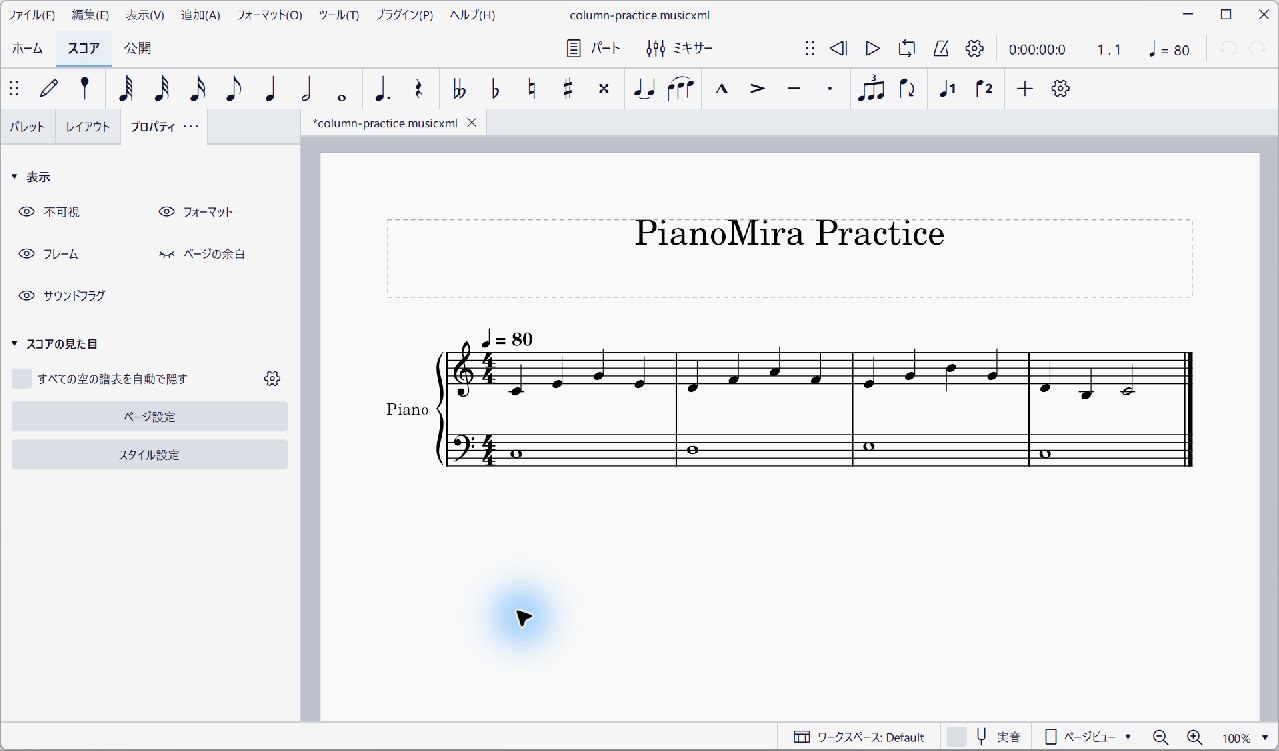
Measure at 80 BPM
A quarter note lasts 750 ms. The short note begins 562.5 ms after the first; another 187.5 ms leads into the next beat. Two 375 ms gaps would be straight eighths.
Separate release from attack
A detached first note can end early without moving the second note. Follow the instant each falling note reaches the keyboard.
Group the short note with the following downbeat
Starting every repetition on the long note can turn the short note into an afterthought with no fixed entry. Practise only the short note and the next downbeat as a close pair. Add the preceding long note after the distance inside the pair feels reliable.
At 80 BPM that short-to-downbeat gap is 187.5 ms. At 40 BPM it becomes 375 ms, giving you room to place the note while keeping time with your foot. Retain the four subdivisions when slowing down rather than turning the figure into two equal notes.
Distinguish a dotted figure from a swung pair
A dotted eighth plus sixteenth divides the beat 3:1. A long–short figure made by joining two parts of a triplet divides it 2:1. At 80 BPM, the second attack falls at 562.5 ms in the dotted version and 500 ms in the triplet version. The downbeats agree, so listen between them.
If your recorded second note leaves too large a gap before the next downbeat, it may have entered early. If it nearly disappears into that downbeat, it may be late. Set the onset first and shape the length of the opening note afterwards.
Does the same entry apply after a dotted rest?
A dotted eighth rest also occupies three quarters of the beat. The sixteenth enters on the fourth subdivision. Count all four aloud while leaving the first three silent to expose the common habit of hurrying an unplayed interval.