Colour the two attacks separately
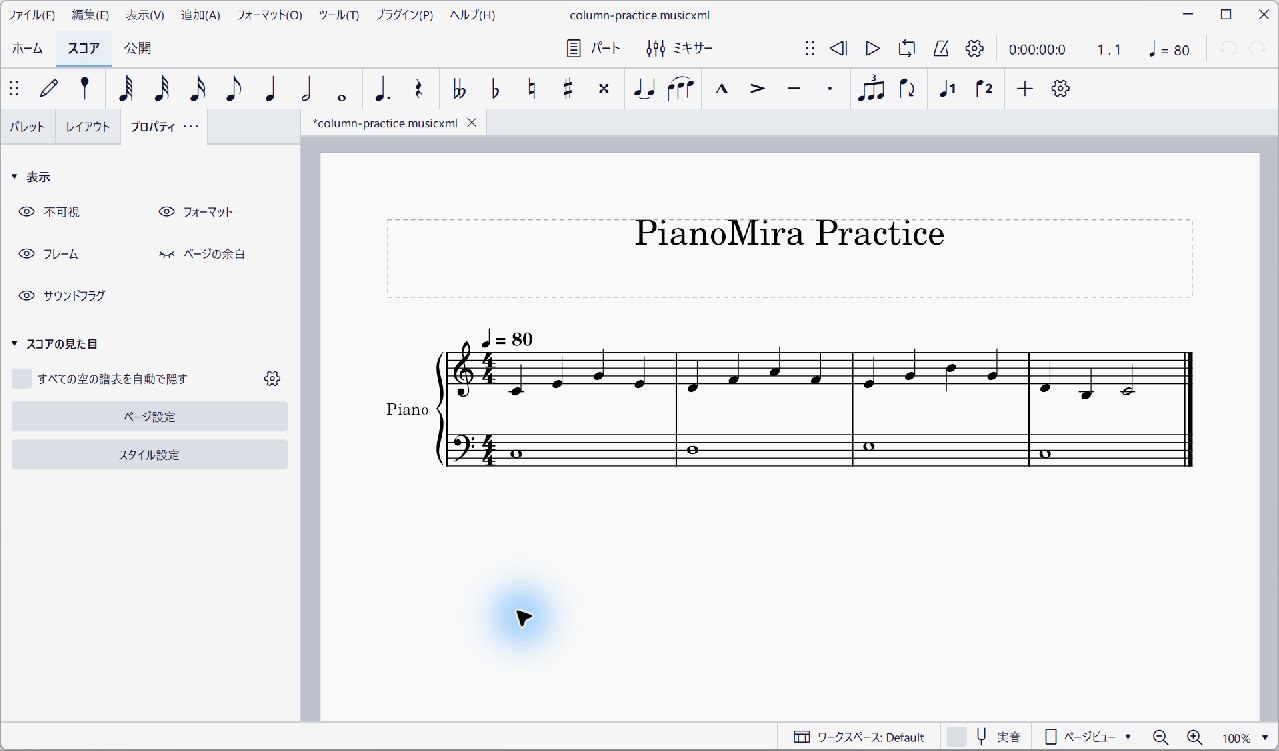
Make a short practice copy with the last right-hand note and first left-hand note on the intended tracks. Watch both hands first, then practise the receiving hand.

Distinguish restriking from substitution
A right-hand C at zero followed by a left-hand C at 0.5 s needs two attacks. Silently changing fingers on a held key needs only one sounded note.
Use sound as a second cue
Choose contrasting hand colours and listen as well as look. An automatically illustrated fingering may differ from a teacher’s preferred substitution.
Rehearse the releasing action on its own
Play and release the right-hand C while the receiving left hand moves into position silently. If it bears down before the key has recovered, the second attack can fail. Practise the release and the receiving attack as two separate tasks.
Mute the accompaniment and listen for two attacks at the same pitch. If there are two sounds but the picture assigns both to one hand, both events may be on the same hand track. Correct audio and correct hand assignment are separate checks.
Teach a silent substitution honestly
A silent finger substitution on a held key has no new attack for MIDI to record. Dividing the note in two to show the switch introduces a restrike that the player never made. Keep one held note and explain the substitution with a caption or filmed hand detail if needed.
The half-second handover in the example deliberately sounds again and therefore needs two notes. Decide whether the lesson teaches a new attack or a silent transfer before deciding how many events to draw.
Is a one-hand video wrong if I can still hear the other part?
A one-hand picture can deliberately use two-hand backing. Distinguish an audible attack from a key visibly depressing. For a handover lesson, tell the learner which part is in the soundtrack and which part they are expected to play.