Inspect the left edges
Export one rolled chord and compare its note starts in a piano roll. Three identical starts describe a simultaneous chord, regardless of the printed symbol.
Try a three-note roll
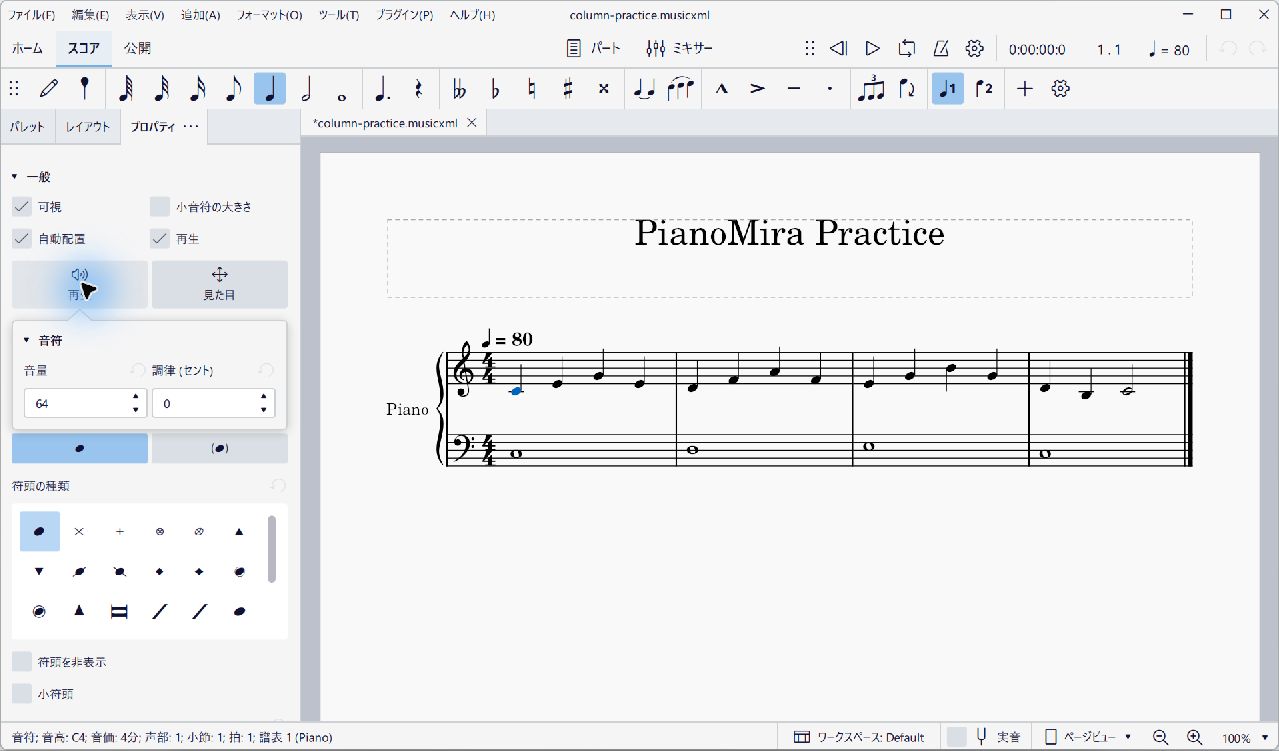
As a listening test, place C, E and G at 0, 35 and 70 ms. The width is an example. Listen against the following melody before widening or narrowing it.
Match the existing recording
If the backing track already contains a roll, follow those three attacks. Moving both the recording and the MIDI can double the intended delay.
Choose the voice that anchors the roll
Some pianists start the bass on the beat and roll upward. Others start just before the beat so that the top melody note arrives on time. Identical spacing inside the chord can have different effects against an accompaniment. First listen for the top voice relative to the bass pulse.
For a beat at 2.000 s and a 70 ms roll, a melody-anchored chord begins at 1.930, 1.965 and 2.000. A bass-anchored version begins at 2.000, 2.035 and 2.070. Audition both against the backing and sing the melody over them to hear the difference.
Preserve direction and the release
Sorting everything from low to high reverses a downward roll. Start that chord at the top. Check that the final arrival has not drifted past the following melodic attack. Listen with the preceding and following chords present; an isolated sweep can hide an overly wide spread.
If the score calls for releasing the chord together, calculate each duration back from the common release point. Giving every note the same duration staggers the releases as well as the attacks. Inspect the right edges in the piano roll after you have set the left ones.
How many milliseconds wide should a roll be?
There is no universal spread. Compare half and twice the example’s 70 ms: the narrow version approaches a block chord; the wide one can make the last note sound like a separate melodic event. Choose with the surrounding beat audible, especially at faster tempos.