Trace the playback order
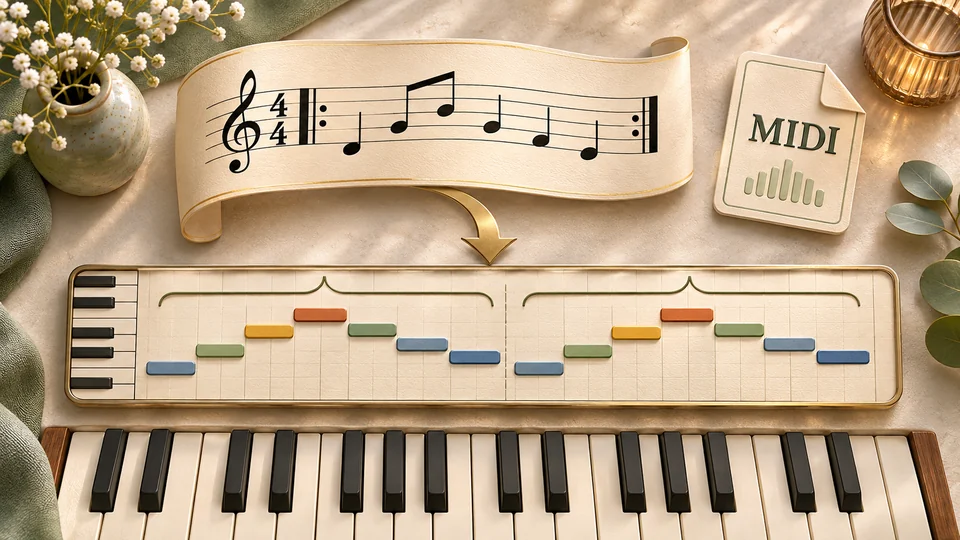
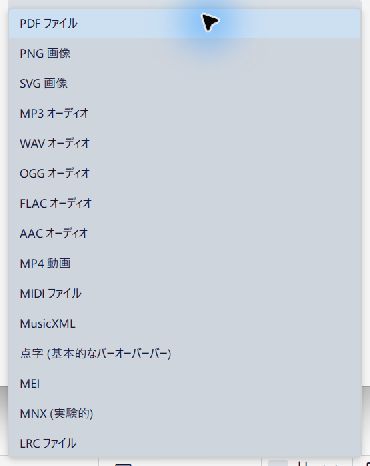
Call the common passage A and its endings B and C. Play the score and listen for A–B–A–C. Export a MIDI with the repeat path represented once as performed.
Use a bass note as a landmark
If the first ending closes on G and the second starts on C, listen for C on the second pass. Matching bar counts alone cannot tell two equal-length endings apart.
Watch for doubled repeats
If someone has already copied out both passes, a surviving repeat sign can play the copied section again. Compare the two exits in both the backing audio and the MIDI.
Trace written bars in performance order
Let written bars 1 and 2 be shared, bar 3 the first ending and bar 4 the second. The performance reads 1, 2, 3, 1, 2, 4. Written bar 4 now occurs as the sixth bar of linear MIDI. Looking at bar four of the export would send you back to the common passage.
Write a bass pitch beside each section as you listen. If the two endings begin on the same note, mark the rest or melodic turn that immediately follows it instead. Choose something that distinguishes the routes by ear even when you cannot see the score.
Catch an incorrect ending even when duration matches
With two seconds per bar the example lasts twelve seconds. Taking the first ending twice also lasts twelve seconds. Start near second ten and listen for the note unique to the second ending; equal file durations cannot verify the route.
When preparing one-hand lessons, preserve measures where that hand rests. If the right hand is silent in the second ending, the left may continue while no right-hand notes fall. Check the first attack where the hands rejoin, not just the last visible note of each part.
Why does the MIDI editor show more bars than the printed score?
A performed repeat occupies fresh time on a linear timeline. Label a landmark “written bar 2, second pass” so the learner can find it in either representation. If pass count, ending and next entrance agree, the difference in displayed bar numbers is expected.