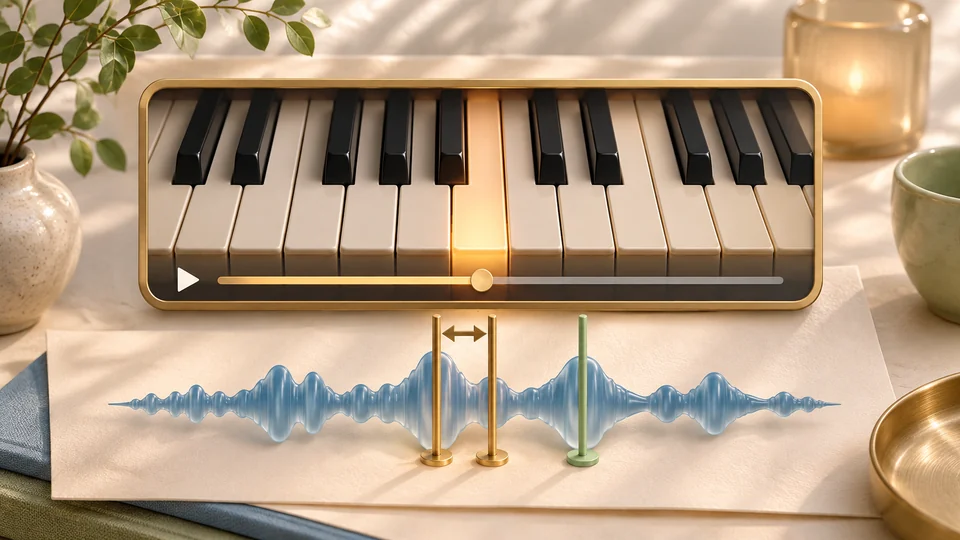
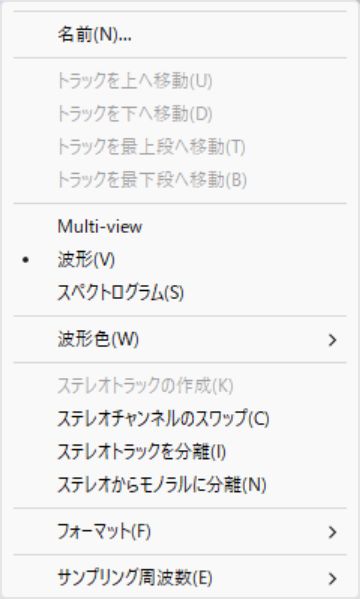
Set the first landmark to zero
Align the first clear attack. Measure to the same final attack in the recording and MIDI. Do not use the end of the file, which may include extra ambience or silence.
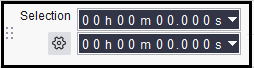
Compare 120.0 with 120.6 seconds
If the audio spans 120.6 s but the picture spans 120.0, the target audio length is about 99.50 percent of the original. Length percentage and speed percentage are reciprocals.
| Original audio span | 120.6 seconds |
|---|---|
| Target picture span | 120.0 seconds, about 99.50% of the original length |
Check the midpoint
If a proportional adjustment fixes both ends but misses the middle, investigate a tempo change or a different take. Split the measurement into sections before applying further correction.
Use a midpoint to distinguish drift from a jump
Measure the same attack near the opening, midpoint and ending. Differences of +0.20, +0.20 and +0.20 s suggest a fixed shift. A pattern of 0, +0.30 and +0.60 suggests proportional drift. A pattern of 0, 0 and +0.60 suggests a cut, inserted pause or changed take between the last two landmarks.
Make sure the landmarks refer to the same musical events. Repeated identical chords are easy to misidentify. A distinctive leap or an attack after a long rest gives you a safer measurement point.
Three different patterns with a similar-looking end error
Enter length and tempo changes with the correct sign
To shorten 120.6 s to 120.0 s, enter 120.0 s in a target-duration field or about 99.50% in a length-ratio field. A tempo *change* field instead needs an increase: 120.6 ÷ 120.0 minus one equals +0.5%. Entering 99.50 as the tempo change produces a very different result.
For a piano recording that must keep its pitch, distinguish a tempo adjustment from a speed change that also alters pitch. Listen to the opening note and remeasure all three landmarks after processing. If only the ends align, investigate the segment where the pattern changes instead of stacking another global correction.
Will converting the MP3 to WAV fix drift near the end?
Changing the container or encoding alone does not correct a tempo difference or missing passage. Measure landmark intervals before and after converting. Two different takes will not acquire matching note timing simply because both are saved as WAV.