Include a black key in the test
Pick a tight passage with a wider label such as F♯. Compare the same bar at another falling-note speed on the same display size.
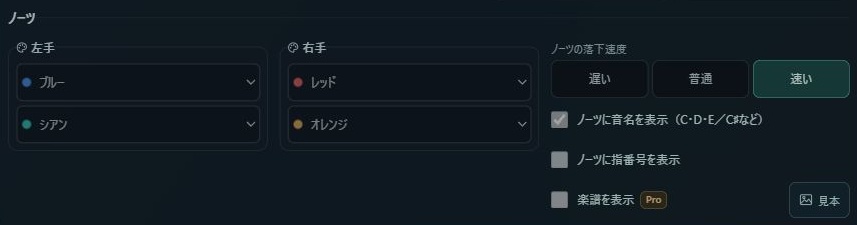
Sixteenths at 120 BPM
There are just 125 ms between attacks. If the lesson requires reading every note, a separate one-hand clip reduces the number of simultaneous labels competing for attention.
| Eighth notes at 120 BPM | 250 ms until the next attack |
|---|---|
| Sixteenths at the same tempo | 125 ms until the next attack, half the reading time |
Judge at viewing size
An enlarged editing window can hide a readability problem. Watch the exported clip on a phone and decide where labels add more information than the moving keys alone.
Diagnose three kinds of unreadable labels
Distinguish text extending beyond its note, text overlapping another label, and clear individual labels passing too quickly to read. A still frame reveals the first two. Only playback reveals the third, so avoid judging settings from a slow introduction.
Try a bar of F sharp, G and A against a left-hand chord. First pause and read the sharp sign. Then play and name the three melody notes. Finally try following them with the accompaniment also in view. The stage that fails tells you what to change.
Know what a faster falling-note setting can change
Faster falling notes can put more pixels between attacks separated by the same time interval. They do not give a learner more than 125 ms between sixteenths at 120 BPM. If the overlap is gone but reading is still impossible, increasing the fall speed again will not buy more time.
Reduce the number of parts on screen, provide a slower practice take, or give the learner the short pitch sequence before playback. Keep the normal-speed performance for listening and isolate the difficult bar in the practice version.
Should the lesson show note names or finger numbers?
Use names for finding unfamiliar pitches and numbers when the pitch is known but fingering is the task. Test the same phrase both ways and ask what question the viewer must answer: which key or which finger? More symbols need not make either task easier.