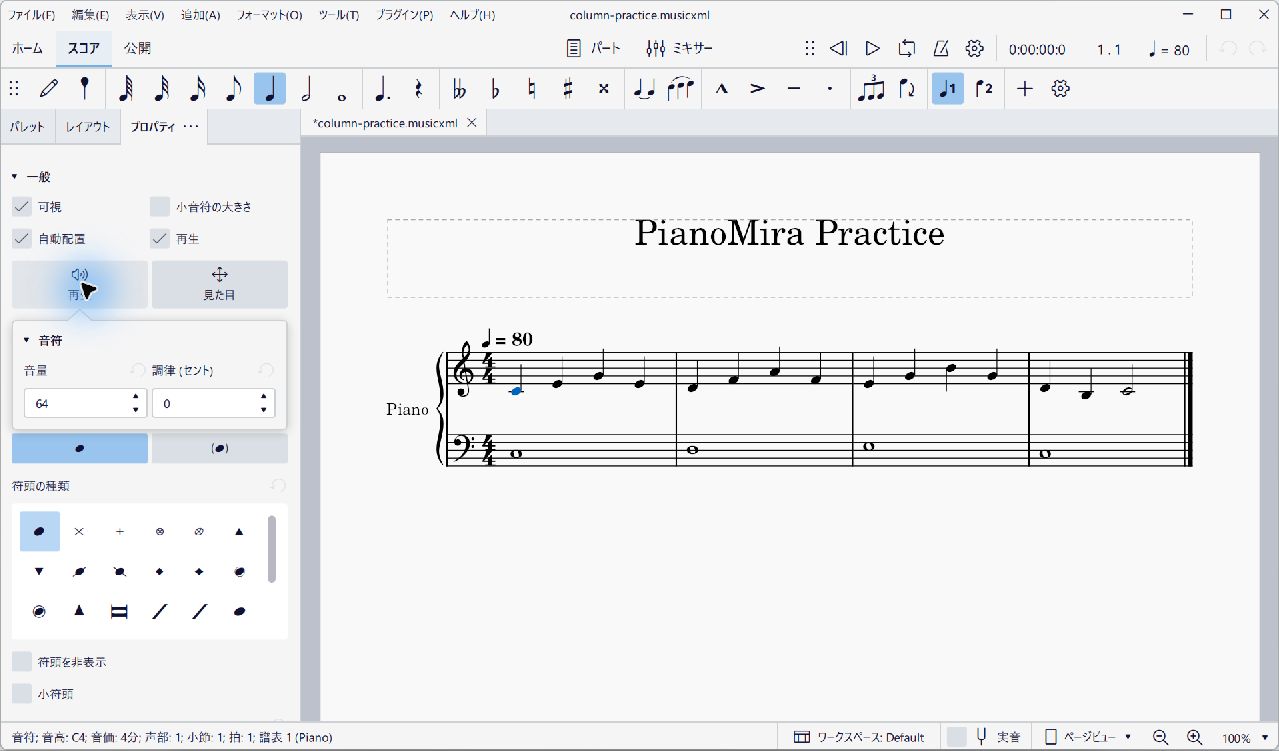
Select the melodic gesture
Listen one bar before and after the crossing. Keep the connected melody in one track and treat the accompaniment as a separate musical line even when their ranges overlap.

Follow E–D–C–B
All four notes can belong to the right hand as it passes below middle C. A left hand reaching up from the bass presents the opposite case.
Check real handovers
Some crossings are genuine hand changes. Look at which hand remains for the following chord before assigning the whole passage by a rigid rule.
Follow the phrase across the split
Imagine a left-hand C–G pattern under a right-hand E–D–C–B. Moving just the B into the left part suddenly inserts a melodic ending into an otherwise regular accompaniment. Solo the right hand and sing along; listen for the missing end of the phrase.
Select the gesture from just before the crossing until it returns. A time-only selection may also grab the accompaniment underneath, so inspect the pitches included before moving the selection to a different track.
Resolve a shared pitch with evidence beyond pitch
When both parts meet on middle C, a single MIDI attack cannot always identify who played it. Consult the original parts or footage if available. Without either, choose an assignment that works physically in context and treat it as a teaching arrangement.
Audition the two tracks independently. The right-hand line should reach its B; the left-hand pattern should not acquire an extra B. Then recombine them. Each part making musical sense on its own is a more useful test than an evenly divided colour pattern.
Can I assign quieter crossing notes to the left hand?
Velocity does not identify a hand. A right-hand phrase can taper to a quiet ending, and the left can play a strong accent. Sing each line alone and consider register, rhythmic role and surrounding pitches together before assigning its colour.