Find notes crossing the cut
Look for events that start before the boundary and end after it. For a practice clip that needs an audible fresh start, retrigger them at the boundary and keep the remaining duration.
Cut at 2.5 seconds
A C held from 2.0 to 3.0 becomes a half-second C at time zero. If you need the original attack and decay, move the cut back to the attack instead.
Listen for pedal resonance
A sound lingering after key release does not necessarily need a new note. Distinguish a held key from resonance before creating an attack.
Identify the state of each key at the cut
Draw a line at the cut and classify each note: already released, still held, or yet to start. Copy future attacks normally and calculate the remaining duration of held notes. Retriggering every previously sounding pitch would also restrike notes ringing only under the pedal.
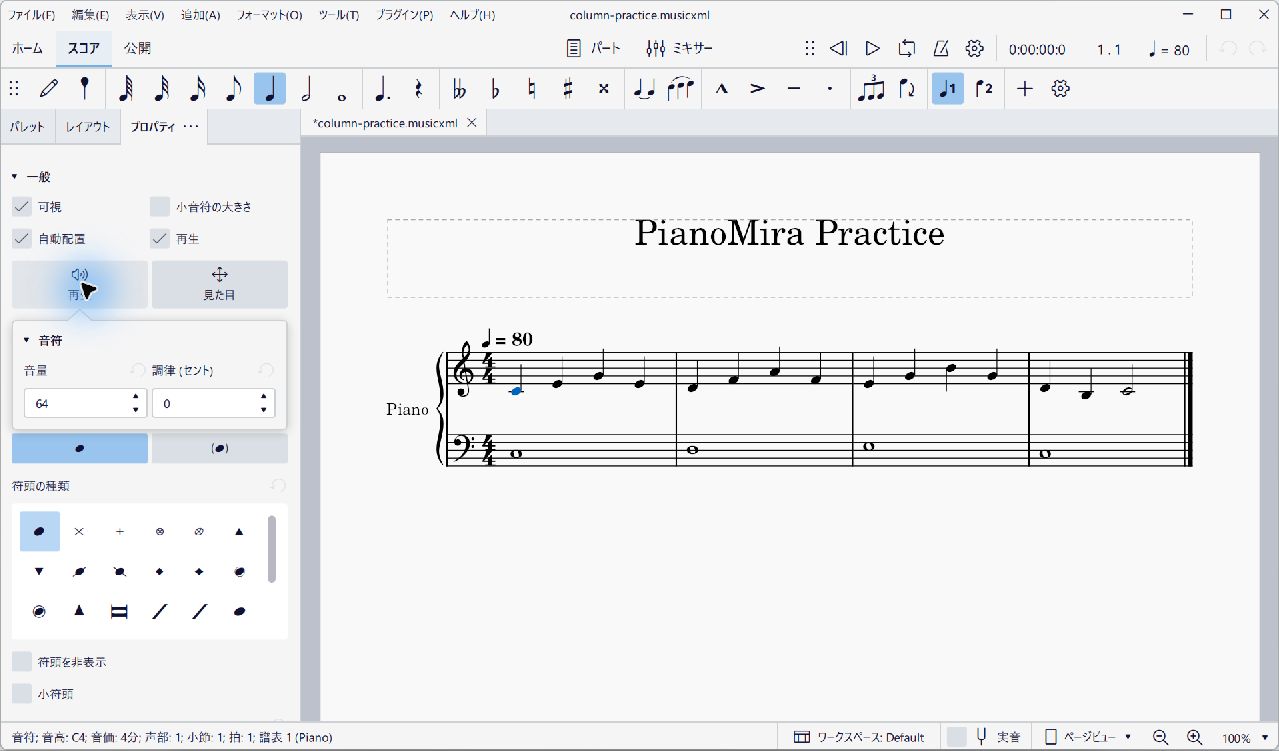
A long bass C beneath a moving right hand is a useful test. The right hand may start correctly while the bass vanishes. If the excerpt sounds thin, inspect the register below the first new melody note rather than concentrating only on that attack.
Choose a practice entrance or an authentic excerpt
For practice, a fresh chord at the boundary can tell learners where to place their hands. For a performance record, adding a fresh visible attack over an already decaying recording may be misleading. Starting half a bar earlier can preserve the original attack instead.
Test pedal-dependent passages from a newly opened file. Seeking into the complete piece and opening an extracted MIDI at zero can result in different initial pedal states. Check the ending as well: the pedal should release so the excerpt does not leave notes ringing into the next exercise.
What about a held note crossing the end of the excerpt?
For a practice loop, release at the boundary and deliberately set the next cycle’s initial state. For a listening excerpt, extend through the real release and pedal lift. A stuck note after playback is a reason to inspect missing note-off or pedal-up events.