Find the downbeat first
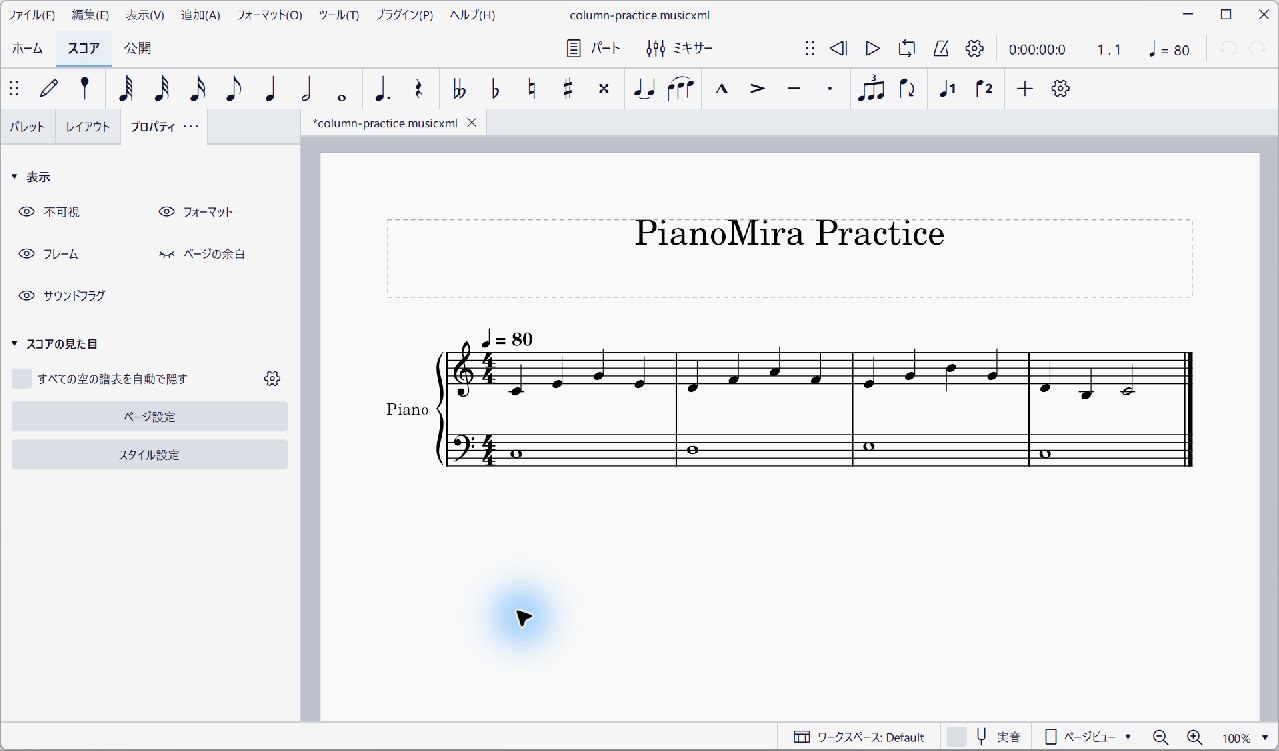
Locate the first strong beat in the recording and mark the matching bar line in the score. Count backwards from it to the pickup. In MuseScore, check the actual duration of the pickup measure.
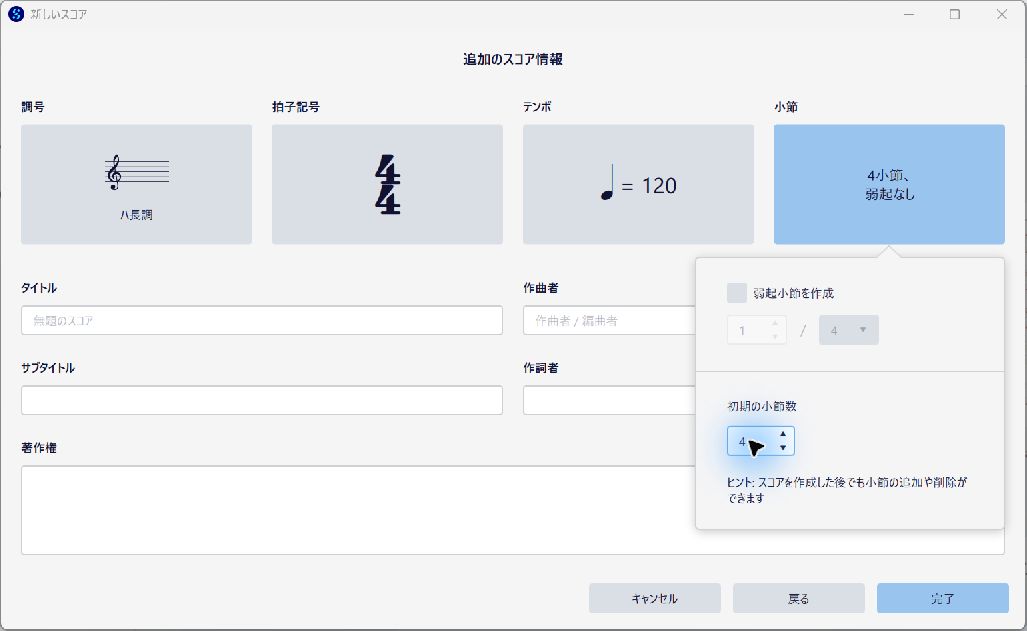
One eighth note at 120 BPM
The pickup lasts 0.25 seconds. If its note begins at zero, the first downbeat belongs at 0.25 seconds. Add any recorded count-in to both times.
Check three attacks
Listen to the pickup and the next two downbeats. If both downbeats already match, changing the tempo will introduce a new error later in the piece.
Distinguish the count-in from the pickup
Trimming everything before the first large waveform peak can remove the pickup along with the count-in. Listen once and write down three events: the preparatory count, the first melody note and the first bass downbeat. A clear bass attack is often easier to locate in both files than a quiet melody entrance.
Suppose the bass arrives at 1.10 s in the recording and the pickup at 0.85 s. The gap is 0.25 s. If the MIDI has the same gap, the score is already behaving correctly. Its start simply corresponds to 0.85 s in the recording. Slide the two clips until both landmarks meet before editing a single note.
Decide whether the measure or the recording needs an edit
If aligning the bass fixes the downbeat but leaves the pickup displaced, inspect the opening measure’s actual duration. A score can retain a 4/4 signature while its pickup measure contains only one eighth note. Limit any change to that opening measure.
Export through the second complete bar and alternate between the recording and the MIDI. The pickup, first downbeat and next downbeat should now agree. In an expressive recording, the actual gap may differ slightly from the calculated quarter second. Use the performed gap when the purpose is to match that particular take.
What if the recording has no count-in or click?
Choose an attack whose pitch identifies it, not the tallest waveform peak. If the pickup is too soft to locate, align the first unmistakable bass harmony change and work backwards. Repeated identical bass notes make poor anchors because a one-beat displacement can still sound plausible.