Count the key presses
Listen to the join in isolation. A tie joins successive notes of the same pitch into one held sound. A slur groups a phrase and can leave the second attack intact.
Try two half notes
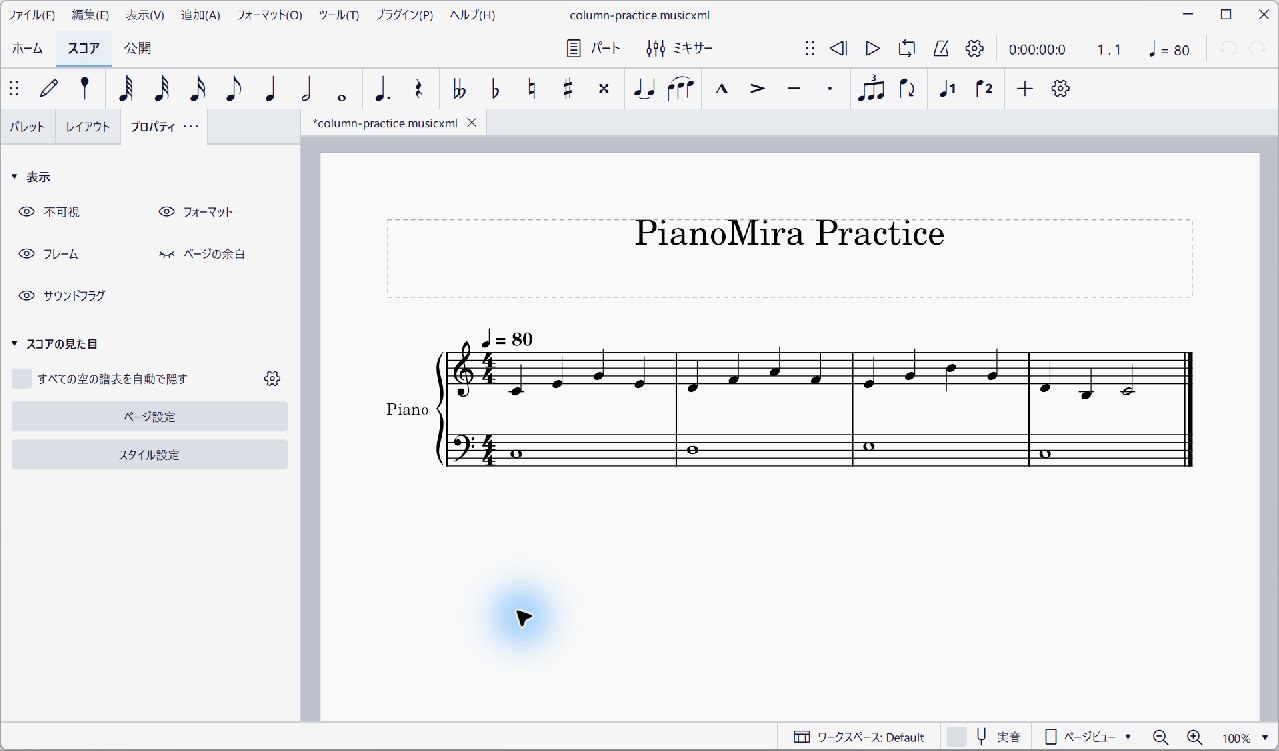
At a quarter note of 60 BPM, two tied half notes last about four seconds. Inspect the exported piano roll at two seconds. There should be no fresh attack from this voice.
Check the other voice
A second voice or hand can legitimately restrike the same pitch. Solo the parts before removing anything from the export.
Hear the difference underneath the curved line
A pianist cannot sound a held key a second time without allowing it to rise. On a low note the difference is particularly clear: the tied sound decays continuously, while a second strike refreshes the attack at the join. Lift the pedal and mute the other parts during this test.
Copy the suspect pair into two empty measures. Make one version with a tie from the first note and another with two ordinary notes of the same pitch. Leave their velocities equal. Accenting the second note would introduce a second difference and make the comparison less useful.
Fix a tie inside a changing chord
For C–E–G changing to C–F–A, suppose only C stays down. The new attacks are F and A. Extending the entire first chord would also hold E and G. Inspect the row for C in isolation, then bring the other pitches back into view and check their releases.
If the export contains one attack on C but the finished clip still sounds twice, solo the backing recording. It may come from a different take containing a restrike. Fixing the printed tie again will not change that recording; decide which performance the video should describe.
Can I just glue adjacent bars in the piano roll?
Check pitch, voice and musical function. A held inner voice can share a pitch with a rearticulated melody in the other hand. Mark the attacks that really must sound in the score first, then join only continuous notes. Adjacency alone is insufficient.