Define the beat
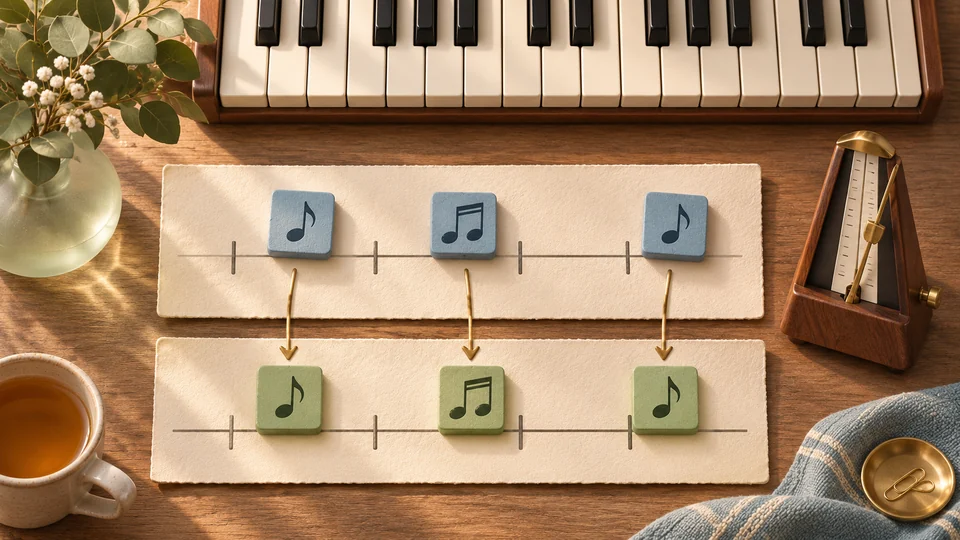
Choose a passage with three eighth-note triplets inside one quarter-note beat. Enter them inside a tuplet in MuseScore and include the following downbeat in the test export.
Measure at 100 BPM
One beat takes 600 ms. The attacks fall at 0, 200 and 400 ms. The next beat starts at 600 ms. Shortening the notes changes their articulation but not these positions.
Inspect the import grid
An ordinary sixteenth-note grid cannot represent all three attacks exactly. Select a triplet grid before tidying the exported passage.
Recognise what straight-grid snapping sounds like
At 100 BPM, a straight sixteenth grid might move starts at 0, 200 and 400 ms to 0, 150 and 450 ms. The following beat still arrives at 600. The resulting gaps are 150, 300 and 150 ms: short, long, short. A metronome clicking only the downbeat will happily agree with both versions.
Compare score playback, the exported MIDI and a copy saved after opening it in a second editor. If only the last copy lurches, leave the original tuplet alone. Examine quantisation on import or during editing in the second program.
Preserve expressive triplets
An instructional example may call for exact thirds. A live performance may lean on the first note and enter the next a little late. Listen to several triplets against the bass. An identical lopsided pattern on every beat suggests grid snapping; a variation tied to the phrase deserves a second listen.
Duplicate just one triplet. Alternate the recorded version and an evenly divided version while keeping the following downbeat fixed. Moving that downbeat as well changes the phrase tempo, making it harder to hear which version of the subdivision you actually prefer.
Do the same offsets work when I slow down the exercise?
Divide the new quarter-note duration by three. At 80 BPM it is 750 ÷ 3 = 250 ms, giving attacks at 0, 250 and 500 and the next downbeat at 750. Merely lengthening note durations while leaving their starts in place will not slow the triplet.