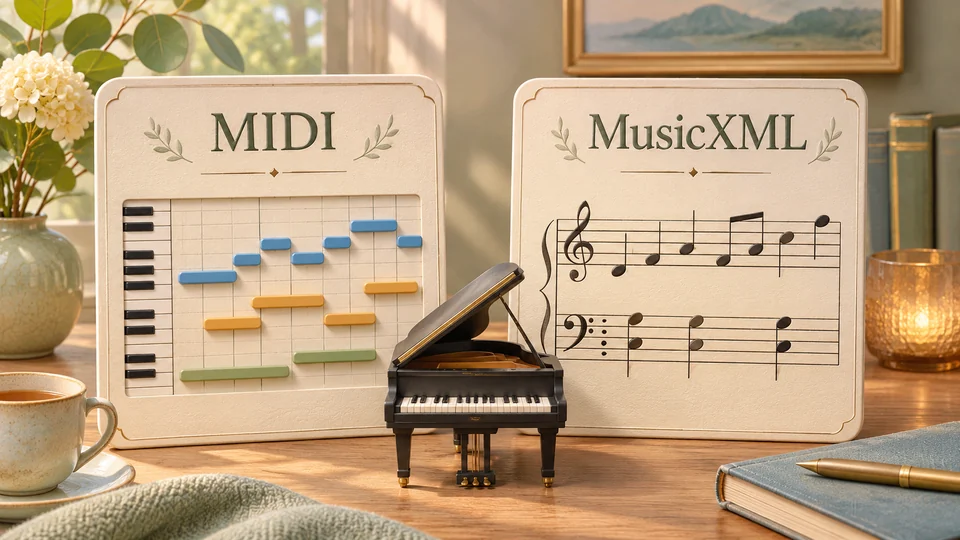
Look for an editable original
If an authorised MSCZ or MusicXML is available, open it and check playback. With paper only, enter the score or use optical recognition as a draft, proofread it, then export MIDI.
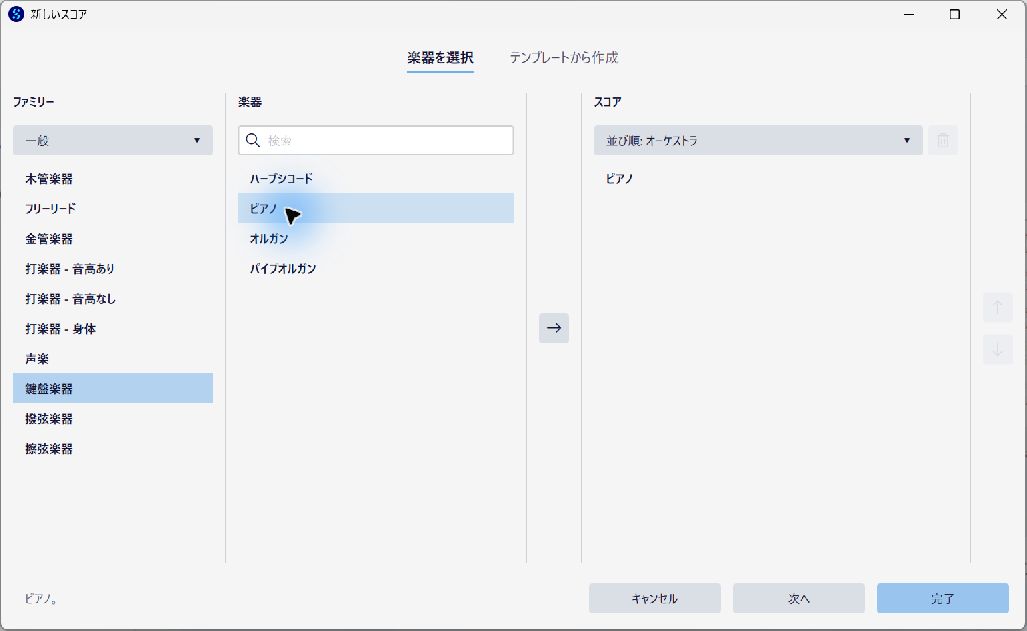
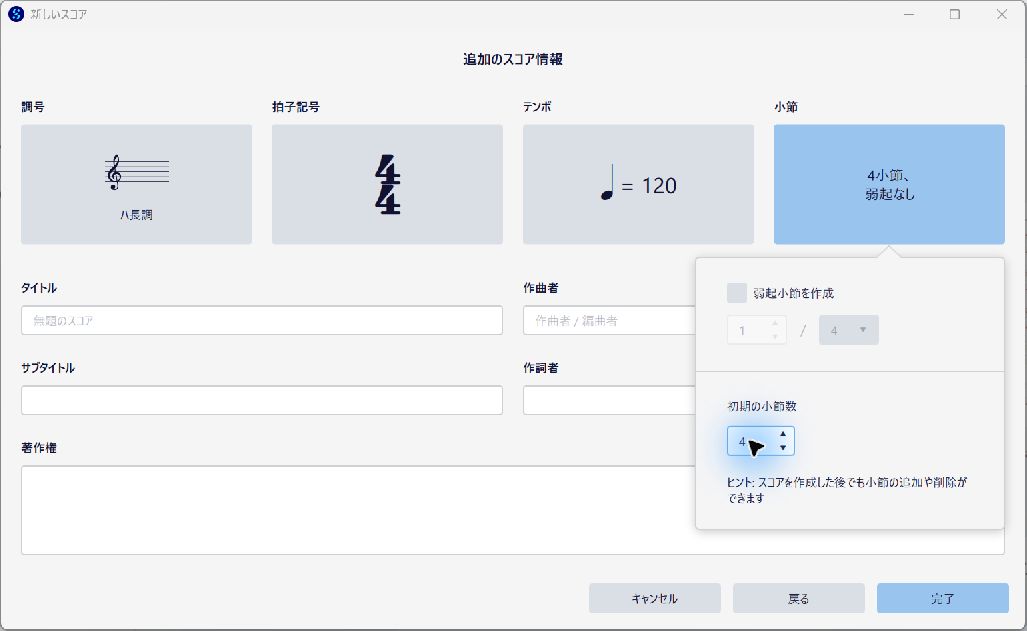
Budget the first four bars
Choose a passage containing bass notes, accidentals, ties or repeats. Check beat counts as well as pitch, and listen for both hand entrances. Use this trial to estimate the remaining correction work.
| Editable MSCZ or MusicXML available | Check pitch and meter in playback, then export MIDI |
|---|---|
| Only a scanned image available | Enter or recognise the score, proofread, then export |
Distinguish a scan from a recording
A scanned image contains no piano sound to transcribe. Export from the corrected score or start with a separate performance recording.
Proofread the rhythm before correcting isolated pitches
A missed eighth rest can shift every subsequent attack even if their pitches are right. First check the duration total in each measure and where the hands meet on strong beats. Then check pitch, accidentals, ties and voices. This avoids correcting pitches against a rhythm that will later move.
A chord misread as a single line may play the correct melody while missing its inner notes. Do not stop after recognising the tune. Solo the bass and count the notes in representative chords against the paper original.
Estimate recognition work from a representative sample
A simple opening sample underestimates the work in a dense, two-voice passage. Test a sparse stretch and one of the hardest stretches, noting error types and correction time. If recognition repeatedly makes the same beaming or voice error, manual entry for that passage may be faster.
Save an editable score before exporting MIDI so a later one-bar correction does not send you back to the scan. Finally verify the performed repeat order and final pitch. A visually plausible transcription and a musically correct playback are distinct milestones.
If I can select printed notes in the PDF, can I extract accurate MIDI?
Selectable glyphs or shapes need not retain musical pitch, voice, beat or repeat semantics. Look for an editable score first and verify any conversion by playback. Good visual layout alone does not establish the correct performed sequence.